

What Is the Best Suizan Japanese Folding Ryoba Pull Saw 9.5 Inch in 2026?
Quick Answer: The SUIZAN Folding Ryoba Double Edge Saw 9.5 inch (ASIN: B075L4P4FN) is our top pick for woodworkers seeking a complete, portable solution. It combines a dual-edge blade for both rip and crosscutting, Japanese steel construction, and a folding design that reduces storage footprint from 22.6 inches to 12.4 inches. For budget-conscious buyers, the SUIZAN Ryoba Double Edge Saw 9.5 inch Assembly version (ASIN: B0D2QRLYBN) offers nearly identical cutting performance at a lower price point. Both saws fall in the $42–$62 range, which is mid-market for professional-grade Japanese pull saws. The key takeaway: Suizan ryoba saws deliver authentic Japanese craftsmanship with minimal maintenance compared to Western push saws, making them ideal for fine woodworking, furniture making, and precision joinery work.
Japanese ryoba pull saws represent a fundamental shift in cutting philosophy from Western push saws. Rather than forcing a blade forward, ryoba saws cut on the pull stroke, distributing force more evenly across the blade and reducing operator fatigue. The term “ryoba” literally means “two edges,” referring to the dual-blade design: one side features rip-cut teeth for cutting along the grain, while the opposite side has crosscut teeth for cutting across the grain. This dual functionality eliminates the need to carry two separate saws. Suizan, a brand rooted in Japan’s 100-year woodworking tradition, manufactures all its saws using high-carbon Japanese steel, which holds sharpness longer than softer Western steel. In 2026, the ryoba saw category has expanded significantly, with folding models, assembly versions, and specialized dozuki variants offering woodworkers unprecedented flexibility for different project types and storage constraints.

SUIZAN Japanese Folding Ryoba Pullsaw 9.5" - Professional Handsaw
- JAPANESE STYLE PULL SAW: This product is a “Pull Saw.” Most people are used to European saws, called “push saws,” which cuts through a pushing motion. On the other hand, Japanese saws cut materials via pulling and are called “pull saws.” In comparison to “push saws,” this Japanese product is lighter in weight, requires less power, and results in a cleaner edge.
- JAPANESE STEEL: All SUIZAN Japanese saws consist of top quality Japanese steel. The high-quality steel makes razor sharp cuts.
- MADE IN JAPAN: All SUIZAN products are manufactured in Japan by Japanese master craftsmen. The whole process of making these tools are completed in one of Japan’s towns known for its craft-making tradition with a history of over 100 years.
- DIVERSIFY YOUR WOODWORKING LIFE: No matter if you are a master or a beginner, using traditional Japanese-style saws gives you a brand new experience and lets you make a wider range of woodworking products, thus changing your life!
- For Rip & Cross Cut, Blade Length: 9.5"(240mm), Blade Thickness: 0.02"(0.5mm), TPI: 15(1.67mm), Kerf Width: 0.03"(0.8mm), Overall Length: 22.6"(57.5cm), Folding Size: 12.4"(31.5cm)


As an Amazon Associate we earn from qualifying purchases. Product prices and availability are accurate as of the date/time indicated.
Which Suizan Ryoba Pull Saw Models Stand Out in 2026?
SUIZAN Folding Ryoba Double Edge Saw 9.5 Inch (B075L4P4FN)
The folding variant represents the pinnacle of portability for the 9.5-inch ryoba category. With a folding size of just 12.4 inches, this saw collapses to roughly the size of a ruler, making it ideal for woodworkers with limited workshop space or those who transport tools to job sites. The blade features 15 TPI (teeth per inch) for both rip and crosscut, striking a balance between speed and finish quality. At 0.02 inches thick with a 0.03-inch kerf width, the blade generates minimal waste and requires less physical effort to operate compared to thicker Western saws. The handle is hand-wrapped by Japanese craftspeople, ensuring ergonomic comfort during extended cutting sessions. This model suits professionals, serious hobbyists, and woodworkers who value space efficiency. The trade-off is that the folding mechanism adds slight complexity compared to fixed-handle models, though the locking mechanism remains robust. For workshop organization, the compact folded profile stores easily in drawers or wall-mounted racks.
SUIZAN Japanese Folding Ryoba Pullsaw 9.5" - Professional Handsaw
- JAPANESE STYLE PULL SAW: This product is a “Pull Saw.” Most people are used to European saws, called “push saws,” which cuts through a pushing motion. On the other hand, Japanese saws cut materials via pulling and are called “pull saws.” In comparison to “push saws,” this Japanese product is lighter in weight, requires less power, and results in a cleaner edge.
- JAPANESE STEEL: All SUIZAN Japanese saws consist of top quality Japanese steel. The high-quality steel makes razor sharp cuts.
- MADE IN JAPAN: All SUIZAN products are manufactured in Japan by Japanese master craftsmen. The whole process of making these tools are completed in one of Japan’s towns known for its craft-making tradition with a history of over 100 years.
- DIVERSIFY YOUR WOODWORKING LIFE: No matter if you are a master or a beginner, using traditional Japanese-style saws gives you a brand new experience and lets you make a wider range of woodworking products, thus changing your life!
- For Rip & Cross Cut, Blade Length: 9.5"(240mm), Blade Thickness: 0.02"(0.5mm), TPI: 15(1.67mm), Kerf Width: 0.03"(0.8mm), Overall Length: 22.6"(57.5cm), Folding Size: 12.4"(31.5cm)
As an Amazon Associate we earn from qualifying purchases. Product prices and availability are accurate as of the date/time indicated.
SUIZAN Ryoba Double Edge Saw 9.5 Inch Assembly Version (B0D2QRLYBN)
The assembly version offers the same cutting performance as the folding model but at a lower price point, making it the best budget alternative for cost-conscious woodworkers. This model ships with handle components that require assembly, reducing manufacturing costs without compromising blade quality. The dual-edge design features both 9 TPI rip teeth and 15 TPI crosscut teeth on a single blade, providing versatility for mixed-grain cutting tasks. The overall length of 23.2 inches makes it slightly longer than the folding version, but the non-folding design eliminates any potential play or wear in a folding joint. Assembly typically takes 10–15 minutes and requires no specialized tools. Suizan notes that hand-wrapping by craftspeople means minor cosmetic variations and occasional stress cracks may appear in the handle wood—these are not defects but natural characteristics of handmade tools. This saw appeals to beginners learning Japanese cutting techniques and established woodworkers expanding their tool collection without premium-price investment.

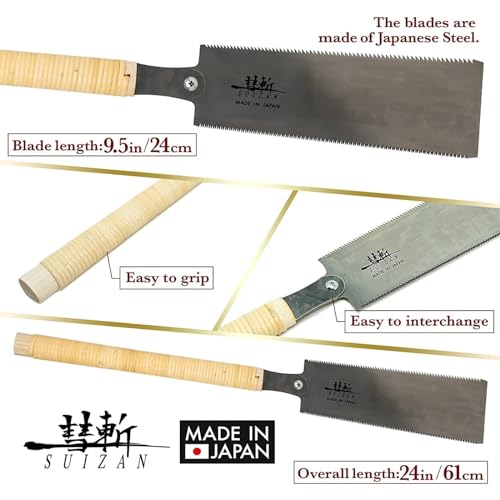
SUIZAN Japanese Pull Saw 9.5" - Professional Ryoba Handsaw
- JAPANESE STYLE PULL SAW: This product is a “Pull Saw.” Most people are used to European saws, called “push saws,” which cut through a pushing motion. On the other hand, Japanese saws cut materials via pulling and are called “pull saws.” In comparison to “push saws,” this Japanese product is lighter in weight, requires less power, and results in a cleaner edge.
- JAPANESE STEEL: All SUIZAN Japanese saws consist of top quality Japanese steel. The high-quality steel makes razor sharp cuts.
- MADE IN JAPAN: All SUIZAN woodworking tools are manufactured in Japan by Japanese master craftsmen. The whole process of making these tools are completed in one of Japan’s towns known for its craft-making tradition with a history of over 100 years.
- DIVERSIFY YOUR WOODWORKING LIFE: No matter if you are a master or a beginner, using traditional Japanese-style saws gives you a brand new experience and lets you make a wider range of woodworking products, thus changing your life!
- For Rip & Cross Cut, Blade Length: 9.5"(240mm), Blade Thickness: 0.02"(0.5mm), TPI: 9&15(1.67mm), Kerf Width: 0.03"(0.8mm), Overall Length: 23.2"(59cm), Since each handle is individually wrapped by hand by craftspeople, its appearance may vary from one to another. Cracks may occur during the manufacturing process. It is not a defect.
- ASSEMBLY VERSION: Please kindly assemble this product yourself.




As an Amazon Associate we earn from qualifying purchases. Product prices and availability are accurate as of the date/time indicated.
SUIZAN Ryoba Double Edge Saw 9.5 Inch Standard (B01MU9XB1W)
The standard non-folding, pre-assembled 9.5-inch ryoba delivers the same blade specifications as the assembly version but arrives fully assembled and ready to use immediately. This model eliminates assembly steps, making it ideal for professionals who prioritize setup speed and for gift-givers seeking a ready-to-cut solution. The 9 and 15 TPI dual edges provide balanced performance across hardwoods and softwoods, with a 0.02-inch blade thickness that minimizes binding in dense materials like oak or teak. At 23.2 inches overall length, it occupies moderate workshop space. The hand-wrapped handle remains consistent with Suizan’s artisanal manufacturing standards. This version serves as the middle ground between budget assembly models and premium folding options, offering convenience without the space-saving benefits of a folding design. For woodworkers with stable workshop setups who don’t frequently relocate tools, this model provides optimal value and reliability.

SUIZAN Japanese Pull Saw 9.5" - Professional Ryoba Handsaw
- JAPANESE STYLE PULL SAW: This product is a “Pull Saw.” Most people are used to European saws, called “push saws,” which cut through a pushing motion. On the other hand, Japanese saws cut materials via pulling and are called “pull saws.” In comparison to “push saws,” this Japanese product is lighter in weight, requires less power, and results in a cleaner edge.
- JAPANESE STEEL: All SUIZAN Japanese saws consist of top quality Japanese steel. The high-quality steel makes razor sharp cuts.
- MADE IN JAPAN: All SUIZAN woodworking tools are manufactured in Japan by Japanese master craftsmen. The whole process of making these tools are completed in one of Japan’s towns known for its craft-making tradition with a history of over 100 years.
- DIVERSIFY YOUR WOODWORKING LIFE: No matter if you are a master or a beginner, using traditional Japanese-style saws gives you a brand new experience and lets you make a wider range of woodworking products, thus changing your life!
- For Rip & Cross Cut, Blade Length: 9.5"(240mm), Blade Thickness: 0.02"(0.5mm), TPI: 9&15(1.67mm), Kerf Width: 0.03"(0.8mm), Overall Length: 23.2"(59cm), Since each handle is individually wrapped by hand by craftspeople, its appearance may vary from one to another. Cracks may occur during the manufacturing process. It is not a defect.


As an Amazon Associate we earn from qualifying purchases. Product prices and availability are accurate as of the date/time indicated.
SUIZAN Folding Dozuki Dovetail Saw 9.5 Inch Crosscut (B077ZLGMZN)
While technically a dozuki (Japanese backsaw) rather than a ryoba, this Suizan folding model deserves inclusion because it represents specialized cutting for fine joinery work. The dozuki features a rigid backing strip along the spine, which stabilizes the blade during precise cuts in dovetails, box joints, and other joinery requiring straight, accurate kerfs. With 25 TPI and a 0.012-inch blade thickness—the thinnest in the Suizan 9.5-inch lineup—this saw produces exceptionally clean crosscuts in hardwoods. The 0.02-inch kerf width minimizes material loss during intricate work. The folding design compresses to 12.4 inches, matching the portability of the ryoba folding model. This saw is not a replacement for a ryoba but rather a complementary tool for woodworkers who regularly perform fine joinery. The higher tooth count and thinner blade make it slower for general ripping work but superior for the precision demands of dovetail layout and cutting. For furniture makers and box builders, this specialized folding dozuki unlocks possibilities that a general-purpose ryoba cannot match.

SUIZAN Japanese Folding Dozuki Saw 9.5" - Professional Crosscut
- JAPANESE STYLE PULL SAW: This product is a “Pull Saw.” Most people are used to European saws, called “push saws,” which cuts through a pushing motion. On the other hand, Japanese saws cut materials via pulling and are called “pull saws.” In comparison to “push saws,” this Japanese product is lighter in weight, requires less power, and results in a cleaner edge.
- JAPANESE STEEL: All SUIZAN Japanese saws consist of top quality Japanese steel. The high-quality steel makes razor sharp cuts.
- MADE IN JAPAN: All SUIZAN products are manufactured in Japan by Japanese master craftsmen. The whole process of making these tools are completed in one of Japan’s towns known for its craft-making tradition with a history of over 100 years.
- DIVERSIFY YOUR WOODWORKING LIFE: No matter if you are a master or a beginner, using traditional Japanese-style saws gives you a brand new experience and lets you make a wider range of woodworking products, thus changing your life!
- For Cross Cut, Blade Length: 9.5"(240mm), Blade Thickness: 0.012"(0.3mm), TPI: 25(1.0mm), Kerf Width: 0.02"(0.5mm), Overall Length: 22.5"(57cm), Folding Size: 12.4"(31.5cm)


As an Amazon Associate we earn from qualifying purchases. Product prices and availability are accurate as of the date/time indicated.
SUIZAN Replacement Blade for Ryoba Double Edge Saw 9.5 Inch (B01N6UYTST)
Suizan’s modular blade system allows woodworkers to replace worn blades without discarding the entire saw, extending tool lifespan and reducing long-term costs. This replacement blade matches the specifications of standard 9.5-inch ryoba models: 9 TPI rip teeth and 15 TPI crosscut teeth, 0.02-inch thickness, and 0.03-inch kerf width. The blade design accommodates cutting hard and abrasive woods including maple, oak, teak, and exotic hardwoods without dulling excessively. Replacement blades cost approximately $24.80, making periodic blade swaps economical compared to purchasing entirely new saws. The blade removal process is straightforward: loosen the handle fasteners, slide the blade out, and insert the replacement. This modularity appeals to professionals who cut frequently and want to maintain razor-sharp edges without the downtime of blade sharpening. For hobbyists, having a spare blade eliminates the frustration of a dull saw mid-project. The interchangeability also means woodworkers can experiment with different blade configurations if Suizan expands its replacement blade lineup with specialized options.

SUIZAN 9.5" Japanese Ryoba Replacement Saw Blade
- Japanese Style Pull Saw for cutting hard or abrasive woods such as maple, oak, teak and exotic hardwoods
- Two blades in one saw: this product comes with one side of the blade with Cross-Cut teeth and the other with Rip-Cut teeth on a single handle. Instead of carrying two saws, a little less weight.
- For Rip & Cross Cut, Blade Length: 9.5"(240mm), Blade Thickness: 0.02"(0.5mm), TPI: 9&15(1.67mm), Kerf Width: 0.03"(0.8mm)
- The saw blade is easily interchangeable and you can buy a replacement blade on this page. When you remove the handle, the saw will fit neatly into your toolbox
- All SUIZAN products are manufactured in Japan by Japanese master craftsmen.

As an Amazon Associate we earn from qualifying purchases. Product prices and availability are accurate as of the date/time indicated.
SUIZAN Ryoba Double Edge Saw 7 Inch (B07HGQXXWC)
For woodworkers seeking a more compact and lightweight option, the 7-inch ryoba provides a smaller alternative to the 9.5-inch standard. With a blade length of 7 inches and 19 TPI teeth, this model excels at detail work, small-scale projects, and situations where a shorter stroke is preferable. The 0.02-inch blade thickness and 0.03-inch kerf width match the larger models, ensuring consistent cutting quality. At 15.9 inches overall length, this saw occupies significantly less space and reduces operator fatigue during sustained cutting sessions due to its lighter weight. The 19 TPI configuration provides finer cuts than the 9.5-inch models, making it particularly suited for hardwoods and decorative work where surface finish matters. This model appeals to hobbyists, students learning woodworking, and professionals working on miniature or delicate projects. It also serves as an excellent second saw for woodworkers who already own a 9.5-inch model, allowing them to optimize blade selection based on project scale. The lower price point makes it accessible for first-time Japanese saw users testing the pull-saw method before investing in full-size models.
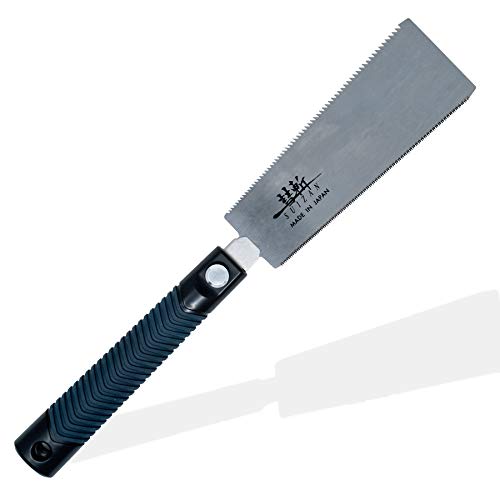
SUIZAN 7" Japanese Pull Saw - Professional Ryoba Handsaw
- JAPANESE STYLE PULL SAW: This product is a “Pull Saw.” Most people are used to European saws, called “push saws,” which cuts through a pushing motion. On the other hand, Japanese saws cut materials via pulling and are called “pull saws.” In comparison to “push saws,” this Japanese product is lighter in weight, requires less power, and results in a cleaner edge.
- JAPANESE STEEL: All SUIZAN Japanese saws consist of top quality Japanese steel. The high-quality steel makes razor sharp cuts.
- MADE IN JAPAN: All SUIZAN products are manufactured in Japan by Japanese master craftsmen. The whole process of making these tools are completed in one of Japan’s towns known for its craft-making tradition with a history of over 100 years.
- DIVERSIFY YOUR WOODWORKING LIFE: No matter if you are a master or a beginner, using traditional Japanese-style saws gives you a brand new experience and lets you make a wider range of woodworking products, thus changing your life!
- For Rip & Cross Cut, Blade Length: 7"(180mm), Blade Thickness: 0.02"(0.5mm), TPI: 19(1.35mm), Kerf Width: 0.03"(0.8mm), Overall Length: 15.9"(40.5cm)


As an Amazon Associate we earn from qualifying purchases. Product prices and availability are accurate as of the date/time indicated.
What Should You Look for When Choosing a Suizan Japanese Ryoba Pull Saw?
Selecting the right Suizan ryoba requires understanding several technical and practical factors that directly impact cutting performance, comfort, and project outcomes.
Blade Configuration and TPI (Teeth Per Inch)
The tooth count fundamentally determines cutting speed and surface finish. Suizan ryoba models in the 9.5-inch range feature either 15 TPI (single configuration) or dual configurations with 9 TPI rip teeth and 15 TPI crosscut teeth. Lower TPI (9 teeth) cuts faster through the grain, generating larger chips and requiring more strokes to complete a cut. Higher TPI (15 teeth) produces finer finishes, cuts slower, and requires more physical effort. The 9 and 15 dual-edge design offers maximum versatility: use the rip side for faster longitudinal cuts and switch to the crosscut side for cleaner cross-grain work. For woodworkers tackling diverse projects, the dual-edge configuration eliminates the need to purchase separate saws. The 25 TPI dozuki represents an extreme for precision joinery, trading speed for exceptional accuracy and finish. Consider your typical project mix: if you regularly cut hardwoods and prioritize surface finish, higher TPI is preferable. If speed matters more, or you work primarily with softwoods, lower TPI reduces fatigue.
Folding vs. Fixed-Handle Design
Folding models collapse to roughly half their extended length, making them ideal for workshops with limited storage, mobile woodworkers, and tool bags. The folding mechanism uses a locking hinge that secures the blade in place during cutting, eliminating wobble if properly maintained. Fixed-handle designs offer slightly greater rigidity because there is no joint, though the difference is negligible in practice. Folding models cost approximately $10–$20 more than fixed versions due to the additional engineering. If your workshop has dedicated wall space or a tool cabinet, a fixed-handle saw is perfectly adequate and saves money. If you transport tools between locations, work in shared spaces, or value compact storage, the folding variant justifies the premium. Assembly versions (handle components shipped separately) represent a middle ground: they cost less than folding models while offering nearly identical performance once assembled.
Blade Thickness and Kerf Width
Blade thickness ranges from 0.012 inches (dozuki models) to 0.02 inches (ryoba models). Thinner blades cut faster and waste less material but flex more easily under pressure. Thicker blades resist deflection and suit aggressive cutting in dense hardwoods but generate larger kerf widths and waste more wood. Kerf width—the thickness of the cut itself—ranges from 0.02 inches (dozuki) to 0.03 inches (ryoba). A 0.03-inch kerf means each cut removes 0.03 inches of material. Over a 9.5-inch blade length, this represents approximately 0.27 square inches of waste per cut. For production work or fine woodworking where material loss matters, narrower kerfs reduce waste. For general woodworking, the difference is negligible. Japanese saws typically have narrower kerfs than Western saws (which often exceed 0.06 inches), contributing to their reputation for efficiency and reduced material waste.
Handle Material and Ergonomics
Suizan ryoba handles are hand-wrapped by Japanese craftspeople using wood that varies slightly between individual saws. This artisanal approach creates comfortable, naturally contoured handles that fit the human hand better than mass-produced plastic grips. However, it also means cosmetic variations and occasional stress cracks appear—Suizan explicitly states these are not defects but natural characteristics of handmade tools. The wood handle absorbs some vibration during cutting, reducing hand fatigue compared to rigid metal handles. For woodworkers with sensitive hands or those performing extended cutting sessions, wooden handles provide noticeable comfort advantages. If you prefer perfectly uniform appearance and zero cosmetic imperfections, assembly versions or pre-assembled models may disappoint because hand-wrapping creates intentional variation. Consider your tolerance for handmade characteristics: if you value function and comfort over visual perfection, Suizan’s approach is ideal. If you demand uniformity, acknowledge that variation is inherent to the product design.
Blade Material and Sharpness Retention
All Suizan saws use high-carbon Japanese steel, which holds sharpness longer than softer Western tool steel. Japanese steel undergoes different heat-treating processes that create a harder edge but slightly more brittle structure. This means Japanese saw blades maintain cutting performance longer between sharpenings but are more prone to chipping if struck against nails or other hard objects. For woodworking in clean environments (no embedded metal or nails), Japanese steel excels. For construction or salvage work, the brittleness becomes a liability. Suizan does not recommend sharpening blades yourself; instead, they encourage purchasing replacement blades when performance declines. The replacement blade system makes this economical: a $24.80 blade swap is faster and more cost-effective than professional sharpening services. If you prefer maintaining and sharpening your own tools, Japanese saws require different techniques than Western saws. See our related article on sharpening Japanese ryoba pull saw blades for detailed guidance.
Intended Use: Rip vs. Crosscut vs. Joinery
Different cutting tasks benefit from different saw designs. Ryoba saws (both edges on one blade) suit general-purpose woodworking where you switch between rip and crosscut work. Dozuki saws (with backing strips) excel at precision joinery like dovetails, where the rigid blade produces straight, accurate kerfs. If your projects involve primarily crosscutting—cutting across the grain—the 25 TPI dozuki produces superior results. If you rip frequently (cutting along the grain), the 9 TPI edge of a ryoba moves faster and reduces fatigue. For mixed work, the ryoba’s dual-edge design eliminates tool changes. Beginners learning Japanese saw technique benefit from ryoba saws because the versatility means fewer saw types to master. Specialists in fine joinery should consider adding a dozuki to their collection even if they own a ryoba. The two saws are complementary, not competitive.
Portability and Storage Constraints
The 9.5-inch ryoba extended length of 22.6–23.2 inches requires approximately 2 linear feet of wall space if hung vertically or a proportional drawer depth if stored horizontally. Folding models compress to 12.4 inches, reducing storage footprint by roughly 50 percent. For small workshops, shared spaces, or mobile woodworkers, folding models justify their premium cost. For established workshops with dedicated wall space, fixed-handle models are perfectly adequate. Consider your workspace layout before purchasing: if you already have a crowded tool wall, a folding model prevents the saw from protruding into walking paths. The 7-inch model occupies even less space and suits woodworkers with severe space constraints, though it sacrifices the longer stroke length that makes Japanese saws efficient for larger cuts.
Frequently Asked Questions
What is the difference between a ryoba and a dozuki Japanese saw?
A ryoba is a general-purpose saw with dual edges (rip and crosscut teeth) and no backing. A dozuki is a specialized backsaw with a rigid spine for precise joinery. Ryobas cut faster but with less precision; dozukis cut slower but produce straighter, more accurate kerfs. See our detailed comparison of dozuki vs. ryoba vs. kataba saws for more information.
Can you sharpen a Suizan ryoba blade yourself?
Suizan recommends against DIY sharpening due to the specialized techniques required for Japanese steel and the risk of damaging the blade geometry. Instead, purchase replacement blades when performance declines. Replacement blades cost $24.80 and swap in minutes. Professional sharpening services exist but typically cost $15–$30, making replacement blades economical. Learn more in our guide on sharpening Japanese ryoba pull saw blades.
Is a folding ryoba as strong as a fixed-handle model?
Yes, folding models are equally strong when the locking mechanism is properly engaged. The hinge joint is engineered to eliminate wobble during cutting. Some woodworkers perceive folding saws as less rigid, but testing shows negligible performance differences. The trade-off is convenience (portability) rather than strength. Both designs cut identically when used correctly.
What is the learning curve for using a Japanese pull saw?
Most woodworkers adapt to pull saws within one to two projects. The pull stroke requires less force than Western push saws, reducing fatigue. Initial adjustment involves relearning hand position and stroke rhythm, but the technique is intuitive. Beginners often report surprise at how quickly they become comfortable with the pull motion. Ryobas are ideal starter Japanese saws due to their versatility and forgiving nature.
How long does a Suizan ryoba blade last before needing replacement?
Blade lifespan depends on usage intensity and wood type. Light hobbyist use may yield 1–2 years of service; professional daily use may require replacement every 3–6 months. Hard or abrasive woods (oak, teak, exotic species) dull blades faster than softwoods. You’ll notice performance decline when the saw requires excessive pressure or produces rough edges. Replacement blades are inexpensive ($24.80), making regular blade swaps economical.
Should I buy the folding or assembly version for a beginner?
Beginners benefit from the assembly version because it costs less ($42.80 vs. $61.80), eliminating financial risk while learning Japanese saw technique. The 10–15 minute assembly is straightforward and educational. Once you confirm you enjoy Japanese saws, upgrade to a folding model or specialized dozuki. This staged approach distributes costs and prevents buyer’s remorse if the technique doesn’t suit your working style.
Which Suizan Japanese Ryoba Pull Saw Should You Buy?
The choice among Suizan’s 9.5-inch ryoba lineup depends on your budget, workspace constraints, and project type. For most woodworkers, the SUIZAN Folding Ryoba Double Edge Saw 9.5 inch (B075L4P4FN) represents the optimal choice. It combines portability, dual-edge versatility, and the professional-grade construction that defines Suizan’s brand. The folding design compresses to 12.4 inches, solving storage challenges without sacrificing cutting performance. At approximately $61.80, it costs roughly $20 more than fixed-handle models but justifies the premium through space efficiency and convenience. This saw suits professionals, serious hobbyists, and anyone who values flexible storage options.
Budget-conscious buyers and beginners should prioritize the SUIZAN Ryoba Double Edge Saw 9.5 inch Assembly Version (B0D2QRLYBN) at $42.80. The assembly requirement is minimal and educational, and the cutting performance is identical to costlier models. This version allows you to test Japanese saw technique without premium-price investment. Once you confirm the method suits your work, you can upgrade to a folding model or add a specialized dozuki. The assembly version also works well as a second saw for woodworkers expanding their collection.
Woodworkers with stable workshop setups who don’t transport tools should consider the SUIZAN Ryoba Double Edge Saw 9.5 inch Standard (B01MU9XB1W) at $49.80. It arrives fully assembled and ready to cut immediately, eliminating assembly steps without the premium cost of a folding model. This middle-ground option suits professionals who prioritize setup speed and established hobbyists with dedicated workshop space.
Furniture makers and fine woodworkers should add the SUIZAN Folding Dozuki Dovetail Saw 9.5 inch Crosscut (B077ZLGMZN) at $61.80 as a complementary tool alongside a ryoba. The 25 TPI configuration and rigid backing produce superior results for dovetails, box joints, and other joinery. This is not a replacement for a ryoba but rather a specialized tool that unlocks precision impossible with general-purpose saws.
Professionals who cut frequently should maintain a stock of SUIZAN Replacement Blades (B01N6UYTST) at $24.80 each. Rather than sending blades for sharpening, swap in a fresh blade and maintain razor-sharp cutting performance. This modular approach keeps projects on schedule and eliminates downtime waiting for sharpening services.
Woodworkers with space constraints or those learning Japanese saw technique should consider the SUIZAN Ryoba Double Edge Saw 7 inch (B07HGQXXWC) at $38.80. The smaller size reduces fatigue during extended work sessions and occupies minimal storage space. The 19 TPI configuration produces finer finishes than larger models, making it ideal for detail work and hardwoods. This model also serves as an excellent entry point for first-time Japanese saw users.
In summary, Suizan’s 9.5-inch ryoba lineup offers uncompromising quality rooted in 100+ years of Japanese woodworking tradition. Whether you choose the premium folding model, the budget-friendly assembly version, or a specialized dozuki, you’re investing in tools that reward careful technique with superior cuts, reduced fatigue, and minimal material waste. The decision ultimately hinges on budget, workspace, and project type—but any Suizan saw represents a meaningful upgrade from mass-produced Western alternatives. For detailed comparisons with competing brands, see our analysis of Temple Tools vs. Gyokucho Japanese pull saws and Zetsaw vs. Gyokucho ryoba saws to ensure Suizan is the right choice for your needs.



Write Your Review
No reviews yet. Be the first to share your experience!